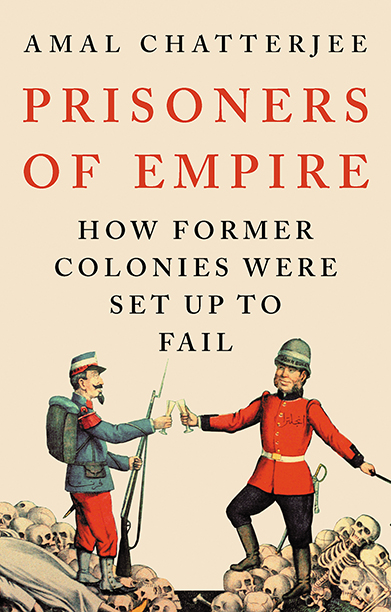
Prisoners of Empire
How Former Colonies Were Set Up to Fail
A compelling social and political balance-sheet of empire, revealing how former colonies worldwide are still shackled by the legacies of colonial oppression.
Description
Why do some former colonies fail, staggering from crisis to crisis, while others recover? Why did so many succumb to dictatorship, corruption, civil war and instability after independence?
Amal Chatterjee argues that these ‘failures’ are underpinned by persistent, robust colonial structures which preserve and reproduce the oppressive, exploitative systems of the past. From land ownership to mining, transport networks to education provision, morality to law, many post-colonial institutions function almost exactly as they did under foreign rule, with power still concentrated in the hands of elites, and inequalities baked in. Drawing on a wide range of contemporary and historical material, including memoirs, economic data and administrative documents, Chatterjee explains how empire not only made its colonies into places of extraction and exploitation, but keeps them there today. Offering a truly global account–from the British Empire to the Belgian, from Mexico to Mozambique, from the Sahel to Sri Lanka–he shows how extractive capitalism and colonialism are intertwined, and how human rights and development are hostage to the imperatives of profit-making.
The world built by empire can still be challenged and changed–but to design a new, equitable future for all, we must first understand the legacies of the past.
Table of contents
Prologue: Roman Roads and Failing States
PART I: The Framework
1. Plunder made Permanent
2. Being Haiti, or the invention of permanent debt
Intermission
3. Administrators and Education
4. Identities, Martial Peoples and Military Regimes
PART II: The State of the Nations
5. Africa
6. Asia
7. North Africa and West Asia (aka The Middle East)
8. The Americas
9. Remainder Territories: France Overseas to Danish-ruled Greenland
10. The Winners: How Colonialism Shapes the Colonisers
Conclusion: A Name, and Moving On
Acknowledgments
Notes
Extended Bibliography
Index
Reviews
‘Examining the persistent infrastructures of extraction from the Global South to the Global North, Chatterjee’s important, concise and accessible book supplies us with the missing link between the colonial exploitation of the past and the predatory global economy of the present.’ — Alan Lester, Professor of Historical Geography, University of Sussex, and editor of The Truth about Empire: Real Histories of British Colonialism
‘A book that will change the way you see the world. Eloquent and clear-sighted, Amal Chatterjee offers a magisterial survey of the complex and destructive legacy of colonial rule, and might just, by doing so, provide a glimpse of a different, more equitable and sustainable, future.’ — Anna Beer, author of Eve Bites Back: An Alternative History of English Literature
‘Charged with wonderfully lively detail and narrative conviction, Prisoners of Empire is a highly persuasive account of how initiatives to reduce global inequity remain continually hobbled by the structures of the past. A truly fascinating read.’ — Jane Draycott, poet
‘A masterful, incisive reckoning with colonial empires and their colonies. A damning account of how the past holds nations hostage, and a powerful case for a future of shared equity.’ — Nira Wickramasinghe, Professor of Modern South Asian Studies, Leiden University
‘In this compelling study of the corrupting legacies of colonialism, Chatterjee exposes the debilitating impact European empires had on the world and how countless nations from Haiti to Greenland continue to struggle under the weight of that appalling inheritance today.’ — David Veevers, Lecturer in Early Modern History, Bangor University
Author(s)
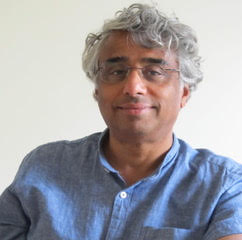
Amal Chatterjee is a fellow of the Royal Historical Society and teaches Creative Writing at the University of Oxford. His work includes plays; a Crossword Book Award-nominated novel; and a historical study, Representations of India. His writing has also appeared in Prospect, the Huffington Post, The Independent and others.
FAQs
Frequently Asked Questions
What is "Prisoners of Empire" about?
Why do some former colonies fail, staggering from crisis to crisis, while others recover? Why did so many succumb to dictatorship, corruption, civil war and instability after independence?
Amal Chatterjee argues that these 'failures' are underpinned by persistent, robust colonial structures which preserve and reproduce the oppressive, exploitative systems of the past. From land ownership to mining, transport networks to education provision, morality to law, many post-colonial institutions function almost exactly as they did under foreign rule, with power still concentrated in the hands of elites, and inequalities baked in. Drawing on a wide range of contemporary and historical material, including memoirs, economic data and administrative documents, Chatterjee explains how empire not only made its colonies into places of extraction and exploitation, but keeps them there today. Offering a truly global account--from the British Empire to the Belgian, from Mexico to Mozambique, from the Sahel to Sri Lanka--he shows how extractive capitalism and colonialism are intertwined, and how human rights and development are hostage to the imperatives of profit-making.
The world built by empire can still be challenged and changed--but to design a new, equitable future for all, we must first understand the legacies of the past.
Who wrote "Prisoners of Empire"?
"Prisoners of Empire" was written by Amal Chatterjee.
Amal Chatterjee is a fellow of the Royal Historical Society and teaches Creative Writing at the University of Oxford. His work includes plays; a Crossword Book Award-nominated novel; and a historical study, Representations of India. His writing has also appeared in Prospect, the Huffington Post, The Independent and others.
What is the Table of Contents for "Prisoners of Empire"?
Prologue: Roman Roads and Failing States
PART I: The Framework
1. Plunder made Permanent
2. Being Haiti, or the invention of permanent debt
Intermission
3. Administrators and Education
4. Identities, Martial Peoples and Military Regimes
PART II: The State of the Nations
5. Africa
6. Asia
7. North Africa and West Asia (aka The Middle East)
8. The Americas
9. Remainder Territories: France Overseas to Danish-ruled Greenland
10. The Winners: How Colonialism Shapes the Colonisers
Conclusion: A Name, and Moving On
Acknowledgments
Notes
Extended Bibliography
Index
Related books