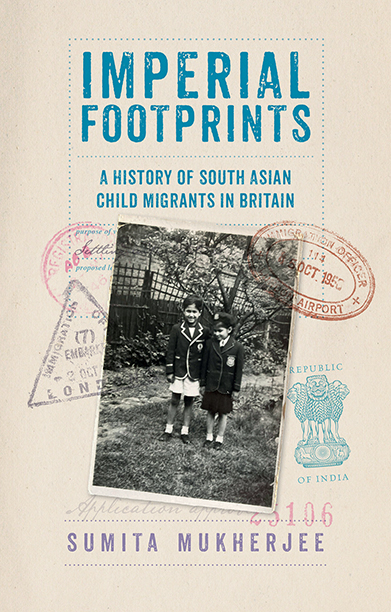
Imperial Footprints
A History of South Asian Child Migrants in Britain
From the Victorian era to Partition, Mukherjee uncovers the unique experiences of the very youngest South Asian migrants to Britain.
Description
Between 1857 and 1947, over 28 million Indians left the subcontinent to live, work and study elsewhere. Today, India has the largest diaspora in the world, with approximately 18 million Indians living overseas. Though often absent from historical narratives, migrant children were instrumental during the time of the British Empire in the development not only of Indian national and diasporic identities, but of British identity too. These children were marginalised by their political status, their race and their age; yet they were fundamental to historical change, from the 1830s through to independence in 1947.
Imperial Footprints vividly charts this history of emigration from British India to the imperial heartland, through the eyes of its youngest participants. From pupils sent to English boarding schools and runaway servants, to sailor children and refugees of war or Partition, Sumita Mukherjee reveals that these child migrants were crucial players in founding Indian communities abroad. Drawing on archival records and firsthand accounts, she offers a portrait of migration to Britain that pre-dated the larger waves of arrivals post-war.
Imperial Footprints challenges the assumptions of the historical voices we often foreground; reflects on post-colonial legacies; and offers a fascinating new perspective on migration and empire.
Table of contents
Introduction
1. The White Indians
2. The Victorian Curiosities
3. The Young Brown Englishmen
4. The Nationalists
5. The Sporting Stars
6. The Suffragists
7. The Casualties of War
8. The Lascars’ Children
9. The Leftists
10. The Partition
Epilogue: Where are you from?
Acknowledgements
Notes
Bibliography
Reviews
‘Evocative and original. This is an important book in understanding the long story of South Asians in Britain.’ — Kavita Puri, journalist, broadcaster and author of Partition Voices
‘Meticulously researched yet eminently readable. Imperial Footprints details the rich and fascinating lives of South Asian child migrants to Britain, revealing individual and collective histories and expansive intercontinental histories of migration, nationalism, socialism, suffragettes, partition and the world wars.’ — Corinne Fowler, author of Our Island Stories: Country Walks Through Colonial Britain
‘A vital, evocative and kaleidoscopic history of the lives of South Asian children that shaped Britain but have long been forgotten or ignored. Mukherjee finally brings these children into focus in this immensely important book.’ — Sadiah Qureshi, author of Vanished: An Unnatural History of Extinction
‘A superb and often deeply emotional story of the bewildered arrival and gradual integration into a different society and environment of thousands of South Asian children, and one that helps me better understand my mother’s experience as a child migrant to the UK in the 1960s.’ — Sushma Jansari, Curator of South Asia, British Museum, and author
‘An eloquently written exploration into the relationship between childhood and empire, with a compelling narrative thread. Mukherjee brings to light a marginalised perspective in the histories of empire by highlighting how children shaped ideas of nationalism, suffrage, anticolonialism and socialism. This is a truly innovative and original scholarly stance.’ — Diya Gupta, author of India in the Second World War
Author(s)

Sumita Mukherjee is Professor of Modern History at the University of Bristol. A fellow of the Royal Historical Society, she is an expert on the histories of South Asian migration and has written widely on this topic. Her books include Indian Suffragettes: Female Identities and Transnational Networks.
FAQs
Frequently Asked Questions
What is "Imperial Footprints" about?
Between 1857 and 1947, over 28 million Indians left the subcontinent to live, work and study elsewhere. Today, India has the largest diaspora in the world, with approximately 18 million Indians living overseas. Though often absent from historical narratives, migrant children were instrumental during the time of the British Empire in the development not only of Indian national and diasporic identities, but of British identity too. These children were marginalised by their political status, their race and their age; yet they were fundamental to historical change, from the 1830s through to independence in 1947.
Imperial Footprints vividly charts this history of emigration from British India to the imperial heartland, through the eyes of its youngest participants. From pupils sent to English boarding schools and runaway servants, to sailor children and refugees of war or Partition, Sumita Mukherjee reveals that these child migrants were crucial players in founding Indian communities abroad. Drawing on archival records and firsthand accounts, she offers a portrait of migration to Britain that pre-dated the larger waves of arrivals post-war.
Imperial Footprints challenges the assumptions of the historical voices we often foreground; reflects on post-colonial legacies; and offers a fascinating new perspective on migration and empire.
Who wrote "Imperial Footprints"?
"Imperial Footprints" was written by Sumita Mukherjee.
Sumita Mukherjee is Professor of Modern History at the University of Bristol. A fellow of the Royal Historical Society, she is an expert on the histories of South Asian migration and has written widely on this topic. Her books include Indian Suffragettes: Female Identities and Transnational Networks.
What is the Table of Contents for "Imperial Footprints"?
Introduction
1. The White Indians
2. The Victorian Curiosities
3. The Young Brown Englishmen
4. The Nationalists
5. The Sporting Stars
6. The Suffragists
7. The Casualties of War
8. The Lascars' Children
9. The Leftists
10. The Partition
Epilogue: Where are you from?
Acknowledgements
Notes
Bibliography
Related books