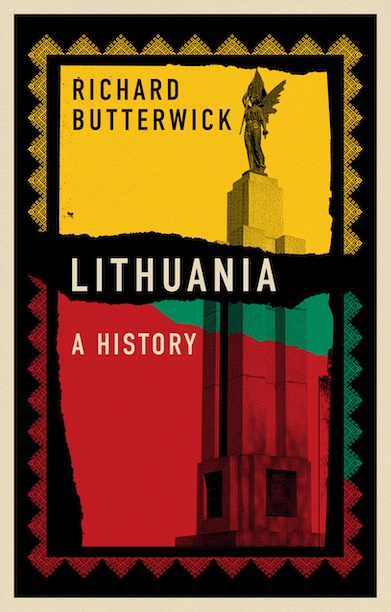
Lithuania
A History
The first popular history of a small post-Soviet state, and a very old European power.
Description
-
Lithuania is often portrayed as a small nation-state that has survived against the odds of history: together with Estonia and Latvia, it won independence at the end of the First World War, lost it to the Soviet Union in 1939–40, regained it in 1990–1, and joined NATO and the EU in 2004, angering the Kremlin. But Lithuania’s rich and complex history stretches back much further than these events, and much further than many realise.
In the fourteenth century, Europe’s last pagan dynasty ruled a vast empire stretching from forests on the Baltic shores to the steppes north of the Black Sea. Forging a remarkable, liberty-based union with the Kingdom of Poland, for 400 years the Grand Duchy of Lithuania blocked Moscow’s pretensions to rule all of Rus’, particularly Belarus and Ukraine. Yet it was in competition with Poles, and under Russian imperial rule, that the modern ethnic Lithuanian nation emerged in the nineteenth century.
This is a lively and accessible history of a fascinating country that was once much larger than it is today; a land where, for centuries, peoples and communities—including Belarusians, Ukrainians, Germans, Poles, Russians, Jews, Karaites and Tatars—lived together in concord and discord.
Table of contents
Note on Transliteration
Introduction
1. The Rise of an Empire (to 1386)
i. From the Ice Age to the Iron Age
ii. Pagans and Christians
iii. Dynastic Empire
2. Forging a Union (1386-1569)
i. Jogaila and Vytautas
ii. The Political Nation of the Grand Duchy of Lithuania
iii. Reformation, Reform, and Union
3. A Commonwealth of Two Nations? (1569-1795)
i. Defining and Defending the Union
ii. Consolidation and Counter-Reformation
iii. Crisis of the Commonwealth
iv. Christians and Jews in Town and Country
v. Sarmatians and Revolutionaries
4. Under Imperial Rule (1795-1914)
i. Romantic Lithuania
ii. Risings and Reprisals
iii. Temperance and Literacy
iv. Modern Lithuanian Nationalism and its Rivals
5. Breaking Empires, Making Nations? (1914-1940)
i. From Occupation to Independence
ii. Between Democracy and Autocracy
iii. Independence Lost
6. Hammer, Swastika, and Sickle (1940-1991)
i. Soviet and Nazi Occupations and the Holocaust
ii. Diplomats and Diasporas
iii. Sovietization and Lithuanization
iv. Independence Regained
7. A Country in Europe (1991-2024)
i. A Democratic Republic
ii. Social Transformations
iii. 26 May 2024
Family Tree of the Gediminid-Jagiellonian dynasty
Acknowledgements
Notes
Further reading
Index
Reviews
‘Butterwick’s Lithuania shows how opposition to Russia has defined the nation’s identity since the Middle Ages… fascinating.’ — Financial Times
‘A compelling English-language history that will be of great value to any interested reader or traveller.’ — TLS
‘A masterful guide through Lithuania’s journey from Europe’s last pagan state to the far smaller nation-state it is today.’ — Engelsberg Ideas
‘As turmoil in the East puts Lithuania centre-stage, there is no better introduction to its fascinating history than this incisive, authoritative and highly entertaining combination of narrative and analysis.’ — Tim Blanning, author of The Pursuit of Glory: Europe 1648–1815
‘Europe’s geographical centre is located near Vilnius—perhaps its historical centre, too. Butterwick’s excellent account of Lithuania’s Empire, Commonwealth with Poland and subjugation to Russia, and now its proud independence once again, illuminates the complex story of a whole continent.’ – Charles Clarke, former Home Secretary and editor of Understanding the Baltic States
‘A concise and highly readable history of this unfairly neglected yet fascinating area, with its rich variety of ethnicities and cultures. Butterwick explores the layered complexities with a master’s touch, both authoritative and light, and refreshingly unpartisan. A remarkable achievement.’ — Adam Zamoyski, author of Poland: A History
‘From a pagan-led empire to union with Poland to a tradition and memory, Butterwick shows how Lithuania positioned itself as a multi-ethnic polity, and the chief alternative to Muscovite autocracy in East-Central Europe. Today, its successor states are rediscovering that legacy, from Ukraine to the Baltic.’ — Andrew Wilson, author of Ukraine Crisis
‘It is difficult to understand the arc of history in Eastern Europe without understanding Lithuania. Butterwick’s excellent book explains centuries of its past, from the pre-Christian era, through prosperous and bitter times, to the present day.’ — Dan Kaszeta, author of The Baltic States in the Second World War
‘A masterpiece. Butterwick’s excellent book is a landmark publication, which will have no serious rivals for many years to come. It has a sovereign grasp on this history.’ — Darius Baronas, Professor of History, University of Vilnius
‘A sweeping history of Lithuania, both erudite and accessible. Butterwick’s rich, nuanced account of the country’s complex past weaves together centuries of political, cultural and social developments. Particularly compelling is his lucid, sensitive treatment of occupation, resistance and adaptation in the Soviet era.’ — Una Bergmane, author of Politics of Uncertainty: The United States, the Baltic Question, and the Collapse of the Soviet Union
Author(s)
Richard Butterwick is Professor of Polish-Lithuanian History at the School of Slavonic and East European Studies, University College London; Principal Historian of the Polish History Museum; and Chairholder of the European Civilization Chair in the College of Europe in Natolin, Warsaw. His books include the award-winning The Polish-Lithuanian Commonwealth, 1733–1795.
FAQs
Frequently Asked Questions
What is "Lithuania" about?
-
Lithuania is often portrayed as a small nation-state that has survived against the odds of history: together with Estonia and Latvia, it won independence at the end of the First World War, lost it to the Soviet Union in 1939–40, regained it in 1990–1, and joined NATO and the EU in 2004, angering the Kremlin. But Lithuania’s rich and complex history stretches back much further than these events, and much further than many realise.
In the fourteenth century, Europe’s last pagan dynasty ruled a vast empire stretching from forests on the Baltic shores to the steppes north of the Black Sea. Forging a remarkable, liberty-based union with the Kingdom of Poland, for 400 years the Grand Duchy of Lithuania blocked Moscow’s pretensions to rule all of Rus’, particularly Belarus and Ukraine. Yet it was in competition with Poles, and under Russian imperial rule, that the modern ethnic Lithuanian nation emerged in the nineteenth century.
This is a lively and accessible history of a fascinating country that was once much larger than it is today; a land where, for centuries, peoples and communities—including Belarusians, Ukrainians, Germans, Poles, Russians, Jews, Karaites and Tatars—lived together in concord and discord.
Who wrote "Lithuania"?
"Lithuania" was written by Richard Butterwick.
Richard Butterwick is Professor of Polish-Lithuanian History at the School of Slavonic and East European Studies, University College London; Principal Historian of the Polish History Museum; and Chairholder of the European Civilization Chair in the College of Europe in Natolin, Warsaw. His books include the award-winning The Polish-Lithuanian Commonwealth, 1733–1795.
What is the Table of Contents for "Lithuania"?
Note on Transliteration
Introduction
1. The Rise of an Empire (to 1386)
i. From the Ice Age to the Iron Age
ii. Pagans and Christians
iii. Dynastic Empire
2. Forging a Union (1386-1569)
i. Jogaila and Vytautas
ii. The Political Nation of the Grand Duchy of Lithuania
iii. Reformation, Reform, and Union
3. A Commonwealth of Two Nations? (1569-1795)
i. Defining and Defending the Union
ii. Consolidation and Counter-Reformation
iii. Crisis of the Commonwealth
iv. Christians and Jews in Town and Country
v. Sarmatians and Revolutionaries
4. Under Imperial Rule (1795-1914)
i. Romantic Lithuania
ii. Risings and Reprisals
iii. Temperance and Literacy
iv. Modern Lithuanian Nationalism and its Rivals
5. Breaking Empires, Making Nations? (1914-1940)
i. From Occupation to Independence
ii. Between Democracy and Autocracy
iii. Independence Lost
6. Hammer, Swastika, and Sickle (1940-1991)
i. Soviet and Nazi Occupations and the Holocaust
ii. Diplomats and Diasporas
iii. Sovietization and Lithuanization
iv. Independence Regained
7. A Country in Europe (1991-2024)
i. A Democratic Republic
ii. Social Transformations
iii. 26 May 2024
Family Tree of the Gediminid-Jagiellonian dynasty
Acknowledgements
Notes
Further reading
Index
Related books