Maithripala Sirisena’s recent victory in Sri Lanka’s presidential election has raised hopes that the island’s long-standing and ever-deepening ethnic conflict might move towards some form of political resolution. The conflict escalated dramatically during the tenure of his predecessor, Mahinda Rajapakse, who directed a successful military campaign to defeat the LTTE, securing huge popularity among the majority Sinhalese. The war itself came to a brutal end in May 2009 amidst mass atrocities and was followed by the militarisation of the Tamil speaking regions by the almost exclusively Sinhala armed forces which continues to this day. Although Sirisena’s past performance and campaign commitments suggest he is as much a committed Sinhala Buddhist nationalist as Rajapakse, ongoing international pressure may inject a powerful check that could move Sinhala leaders and society more broadly towards a just and lasting political solution to the Tamil question.
The new administration takes power at a time when Sri Lanka faces unprecedented levels of international pressure centred largely on accountability for war time abuses, demilitarisation and reconciliation through an inclusive political settlement that addresses Tamil demands for autonomy and equality. In March this year, a UN investigation into war crimes, crimes against humanity and human rights abuses since 2002 will report its findings to the UN Human Rights Commission. The UN probe was mandated after the repeated refusal of Rajapakse government’s to acknowledge, let alone credibly investigate, allegations of war crimes and crimes against humanity. Rajapaksa’s decision not to recognise or cooperate with the UNHRC-mandated investigation intensified his government’s international isolation. More generally, Rajapakse’s uncompromising defence of Sri Lanka’s Sinhala Buddhist state order, manifest in the government’s refusal to seek a political solution to the ethnic crisis or demilitarise the Tamil areas, also fuelled tensions with former allies, principally Western states and India.
Unsurprisingly, international demands for both accountability and reconciliation have already begun to press upon the new government. Indian Prime Minister Modi, the first to congratulate Sirisena, called for ‘genuine and effective reconciliation.’ US secretary of state John Kerry, while welcoming the new government, also cautioned that ‘real challenges’ remained, stressing issues of human rights and the ‘problems of inclusivity.’ Likewise the UN Secretary General, the Canadian Foreign Affairs Minister and the British Prime Minister all stressed the need for accountability and reconciliation in their congratulatory messages; the latter explicitly calling on the new President to co-operate with the UN investigation.
While Sirisena’s stance on accountability for wartime atrocities and reconciliation through a political solution has thus far been indistinguishable from Rajapakse’s, it is clear that the new government is keen to reverse Sri Lanka’s growing international isolation. In a recent public address from Kandy—the historical seat of Sinhala Buddhist power—Sirisena emphasised his intention to normalise Sri Lanka’s strained international ties. Furthermore, his government is closely linked to political figures—former president Chandrika Kumaratunga and newly appointed Prime Minister Ranil Wickramasinghe—who are keen to mend ties with both the West and India. Indeed it is clear international pressure is already having an effect. In response to the renewed international calls for Sri Lanka to cooperate with the UN inquiry which accompanied congratulatory messages, Sirisena’s stance on accountability has started to move, with promise of a domestic investigation and prosecution.
In the months before defecting from the Rajapakse government in November, Sirisena attacked the UN investigation as an international conspiracy organised at the behest of the LTTE and vowed to protect Sri Lankan political and military leaders from prosecution, including Rajapakse and his family. Indeed, in his election campaign he boasted of his own role as Acting Defence Minister during the final stages of the war—when many of the worst atrocities occurred. However, in the days after Sirisena assumed office, a spokesperson for the president has suggested that ‘mistakes’ may well have been made and if individuals had broken the UN mandated laws of war, they would have to be prosecuted. The government’s insistence on a domestic rather than international mechanism remains unacceptable given the deeply politicised and compromised nature of the judiciary and criminal justice system. For these reasons, and Sri Lanka’s long history of sham domestic investigations into human rights abuses, this is still a long way off meeting international, let alone Tamil expectations. Nevertheless, the shift in position is notable and suggests a dawning realisation of international realities.
Although Sinhala Buddhist nationalism is a dominant and pervasive force in Sri Lanka, the threat of international isolation is a potent reality check. Indeed, the growing sense that the Rajapakse government had ‘mishandled’ its foreign relations and had alienated western states as well as India fed his declining popularity, particularly amongst Sri Lanka’s political elite. Even former Rajapakse officials and acolytes have argued that foreign policy has gone badly wrong. Rajapakse himself was clearly not immune to international pressure; a spokesperson for Sirisena told reporters that it was diplomatic pressure that deterred Rajapaksa from staging a coup so as to hold onto power after his electoral defeat.
Beyond the narrow circles of the political elite, international pressure can also be effective in shifting wider Sinhala society’s determination to maintain Sinhala Buddhist nationalist dominance. It is important to note that while Rajapakse lost the elections overall, he won a slight plurality of the Sinhala vote. Conversely, although Sirisena’s victory relied heavily on Tamil and Muslim revulsion at the Rajapakse regime, his campaign focussed exclusively on Sinhala concerns, and he repeatedly committed to maintaining the military’s tight control of the Tamil speaking regions and rejected Tamil demands for autonomy. But this position makes rapprochement with the international community difficult; the latter’s frustration has already prompted mention of sanctions in the event of Sri Lanka’s continued non-compliance with the UN investigation.
Such an escalation is not something that could be lightly dismissed and weighs heavily on the economic as well as social orientations of Sinhala society. Sri Lanka’s primary export markets are in the West and India is Sri Lanka’s largest overall trading partner. Likewise—and despite all the talk of the ‘turn’ to China—middle class and upwardly mobile Sinhalese, as well as Tamils, aspire to an English education and, where possible, higher education in the West. Furthermore cricket, that key badge of Sri Lankan national identity and pride, links the country to the English speaking Commonwealth. In short, while majority Sinhala opinion is opposed to international demands on accountability for wartime atrocities and political reconciliation with the Tamils, it is nevertheless linked by enduring cultural and economic ties to the very states and societies from which these demands emanate.
The new government’s stated eagerness to rebuild strained international ties and restore Sri Lanka’s tarnished international image is key leverage that can be used to shift Sinhala leaders and society towards accepting international realities and the need for a just and lasting solution to the ethnic conflict. The broad international coalition—including states, international human rights groups, Tamil diaspora groups and political groups in Tamil Nadu—that has sustained the momentum for accountability and reconciliation should now press for concrete measures that will start to change ground realities.
Civil society groups in the northeast have already demanded demilitarisation, the return of confiscated land and the repeal of the Prevention of Terrorism Act as urgent concerns. They have also called for the thousands detained without charge—sometimes for years—by the Sri Lankan authorities to be either charged or released. Another important step would be to remove the proscription of prominent Tamil diaspora organisations that the Rajapakse government listed as terrorists soon after the March 2014 UN resolution. This would allow the large Tamil diaspora to contribute its much needed and substantial skills as well as financial resources to the urgent tasks of rehabilitation in the war-shattered northeast.
The end of the Rajapakse government certainly represents an opportunity for change but this does not mean that change is inevitable. In broad terms the election merely saw the replacement of one avowed Sinhala nationalist leader with another equally committed to maintaining a unitary and majoritarian Sinhala Buddhist order. It is this dynamic that has fed the ethnic conflict over the past several decades, and continues to drive the militarised repression and exclusion that characterises relations between the state and the Tamils. What is different about this election is the context of unprecedented international pressure. Only the continuation of this pressure can sustain the reality check that produced last week’s election outcome and make its legacy different from those of previous ones.
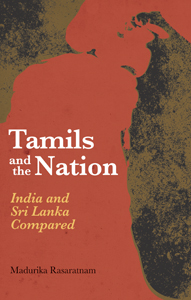 Madurika Rasaratnam is Lecturer in International Conflict Analysis at the University of Kent and author of the forthcoming book Tamils and the Nation: India and Sri Lanka Compared.