Waitrose has suspended sales of overfished mackerel, pointing its customers to other species, including (why should it earn an exclamation mark?) herring! On holiday in Portugal, who doesn’t love the barbecue grilled sardines? Herring is similar, a little bit bigger and even better. Everybody is going to love herring! And indeed they should, but while chefs have been torching mackerel like there’s no tomorrow, over the last couple of decades I think I can count on one finger the times someone has brought herring into the Masterchef kitchen (she was Swedish).
Some blame the collapse of herring populations in the 1970s: the herrings came back, but our taste for it never did. It goes back so much further, though… When John Gladman was crowned Norwich’s King of Christmas in 1444, it was the effigy of Lent which was dressed in red and white, in fact, in the skins of red (salted and smoked) and white (salted) herrings. Feast away, boys and girls, the effigy warned the Norwich crowds, you’ve got six weeks of nothing but herring coming down the pipe! Back then, Roman Catholic fast days took up 38% of the eating year. Herring may be incredibly tasty, but after 44 days even its most ardent enthusiasts can begin to tire.
Herring was mocked throughout Europe. On Ash Wednesdays in Bavaria they would search for their lost feasts, some carrying the fish on poles, Herrings, herrings, stinking herrings! they cried, puddings now no more! In Rheims, on the Wednesday before Easter, cathedral canons would process through the streets dragging herrings on strings: each canon tried to step on the one in front; each tried to prevent theirs being stepped on. In Cork, as Easter finally approached, they would whip the herring out of town. Even today, Catalan children at Christmas beat Caga Tió‘s bum, telling it not to shit herring (it’s too salty tasting). They want turrón, the local nougat. Throughout Europe, however, they never bore a grudge against the silver darling… Only in England.
It has been 492 years since Henry VIII got rid of fasting days. In 1563 Good Queen Bess introduced secular fish days to save the fishing industry, but no one really paid attention. The vast markets for British salt herring in Russia and Germany collapsed between the wars and one of the priorities of the Herring Industry Board, established in 1936, was to develop the home market. A couple of years later, with catches thrown overboard and barrels of salt herring piling up, there was a debate in Parliament. Walter Elliot, Minister for Scotland, considered a proposal to subsidise distribution to the poorer classes for the benefit of necessitous children. He was not convinced, however. You cannot feed necessitous children on raw salt herring, he said. I can imagine nothing which would upset a child more. Even hunger presumably. The home market continued to decline, notwithstanding the board’s inspired slogan, Eat more herring!
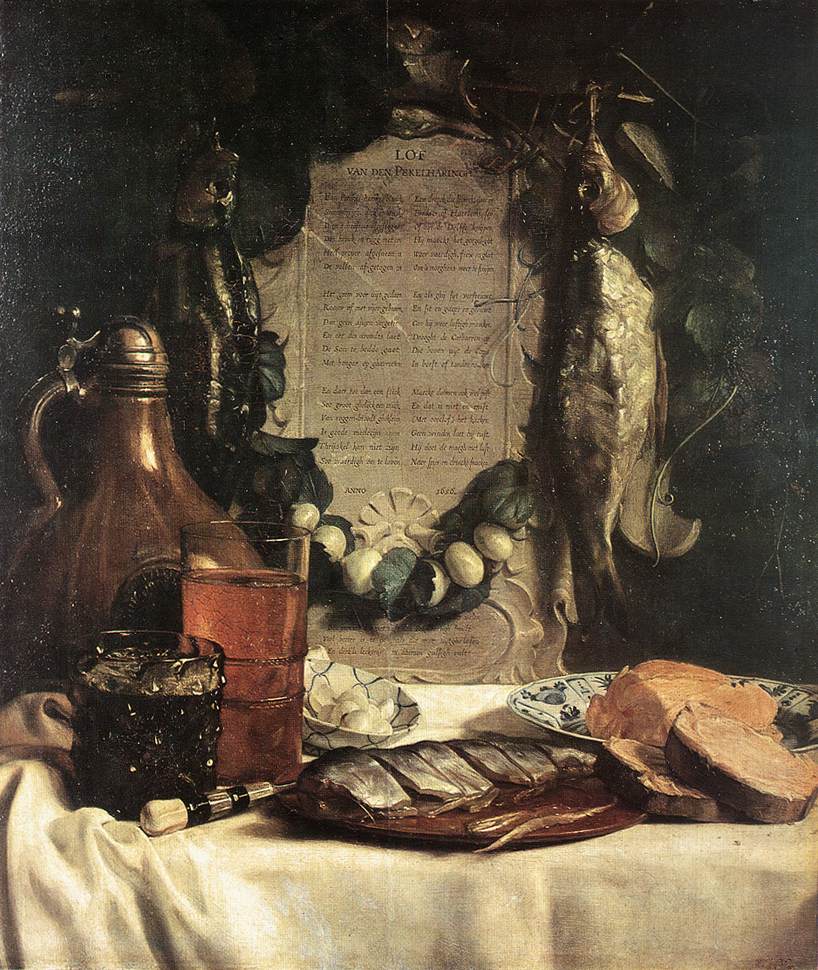
Scientists tell us we should eat oily fish twice a week. Aberdeen University’s Rowett Institute says, for health, food miles and sustainability, herring is the best choice. I’m with Paul Neucrantz (De harengo, 1654), who thought while salmon might, very slightly, edge it for taste (he wasn’t talking about the farmed product), when you added herring’s health benefits it knocked all other fish into a cocked hat. It does!
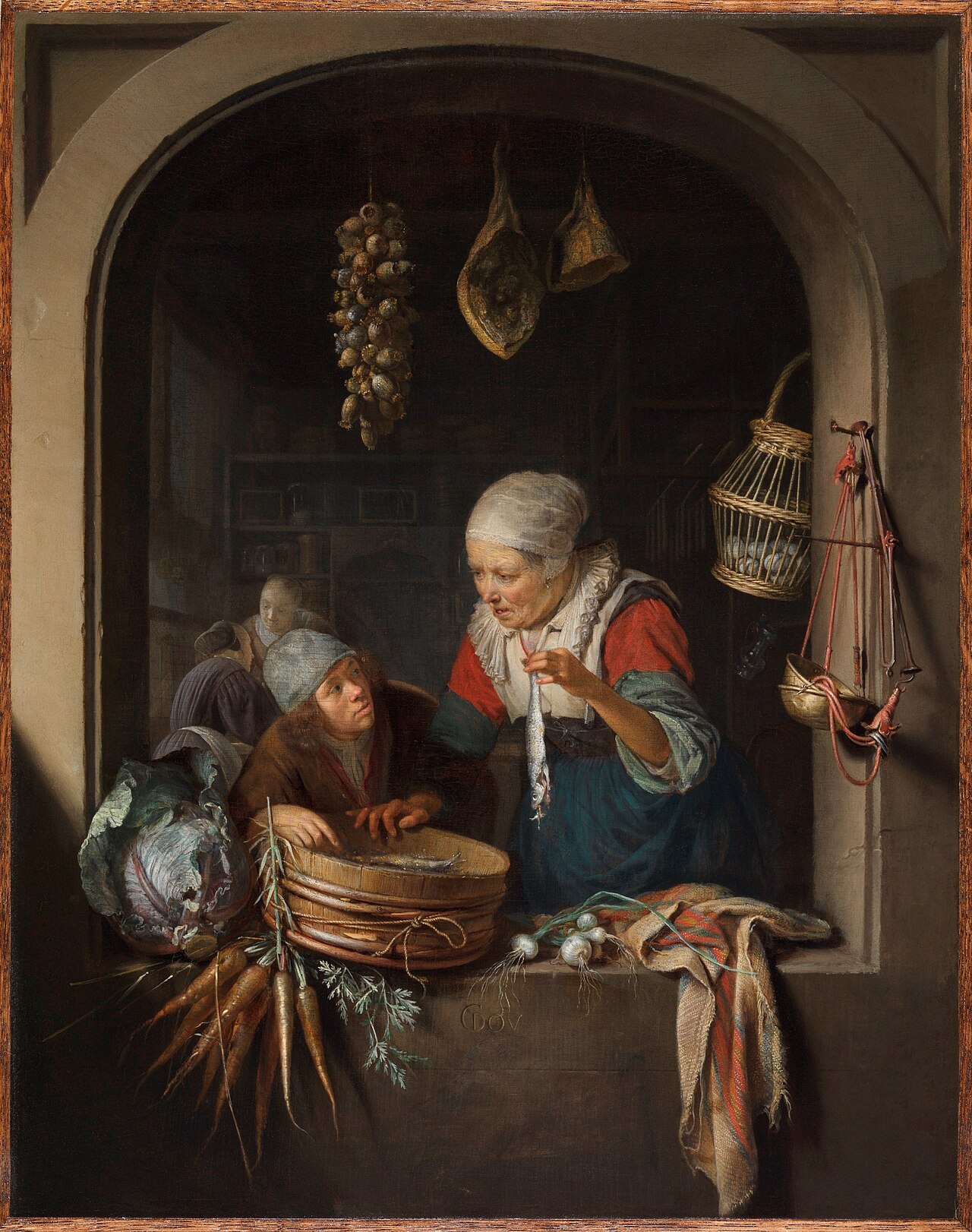
In the Netherlands, they have loved their maatjes salt herring for centuries, even the children dangling it seductively above their open mouths. Mmmh! Denmark happily constructs its herring smørrebrød. Sweden’s glassmaker’s herring imagines the tasty joy of the slices seen through the translucence of the pickling jar. Did a Russian chef in 1919, tasked with creating a dish that would stop the clientele drunkenly smashing the furniture, come up with Shuba (herring under a fur coat) or was it already a traditional Ukrainian dish. These things matter, although the Polish herring under a blanket (śledź pod pierzynką) could have provided the prototype? Either way, it’s a stunning, great-tasting, layered salad of salt herring, potato, onion, carrot, beetroot and mayonnaise that would grace any table.
You can still get red herring at some Caribbean grocers: stir-fried with tomatoes, peppers, herbs and a bit of Scotch bonnet, it’s fantastic. The less-strongly smoked golden herring, a legacy of the Levant trade, is now produced in Greece and Egypt with Russian or Norwegian fish, but you can find it, here, in a number of Asian food stores. Celebrate Egypt’s Spring festival, Sham Elnessim with renga bel tahini. The festival goes back to pharaonic times, but since the pre-Islamic Copts it has always been held on Easter Monday. Forget what the food histories tell you, chopped herring or forshmak, joy of the Jewish diaspora, probably came north to Germany with migrants from Italy before it made its journey East. Neucrantz suggests it was a favourite of the great Italian naturalist Ulisse Aldrovandi.
It’s not hard to find a Scot still rhapsodising tatties an’ herrin’, which can involve fresh or salted fish cooked in the steam of the potato pot, a sliced potato gratin like the Swedish Jansson’s temptation and all the stages in between. Waitrose is introducing a new line of Scottish hot-smoked herring. Britain’s only traditional hot-smoked fish is haddock (the excellent Arbroath smokie) but hot-smoked herring is big in the Baltic. Imagine yourself on the Danish island of Bornholm with a plate of Sol over Gudhjem: buckling with chives and red onion rings, one of them securing a raw egg yolk so, at the cut of your knife, it will flow unctuously over the hot-smoked fillet.
Clovelly’s last herring fisherman Stephen Perham has a spiced and soused herring recipe made with 50% vinegar and 50% black tea ,which has been in his family since the eighteenth century. It beats the one in my great grandmother’s hand-written recipe book. Mind you, it’s always going to be hard to beat the simple pleasure of fresh herring fried in oatmeal. Or a kipper. Or a bloater. Herrings abound off the coasts of Britain. If you don’t often see them south of the border it’s because England’s herring quota owners sold over 90% of it to a single, large, Dutch pelagic trawler. There was no home market and now it’s mostly not even landed here.
You may say that I’m a dreamer, but I’m not the only one. Some of us still dream of herrings on the slab of every fishmonger. We dream of reclaiming a birthright stupidly abandoned. Eat more herring! we will cry and a nation will answer, Good idea!
Rigby’s Encyclopaedia of the Herring was published in October 2025.

Graeme Rigby’s encyclopaedia grew out of a BBC Radio 4 series on preserved fish, Rigby’s Red Herrings, and the blogs and podcasts website herripedia.com. Part of Amber Film & Photography Collective for nearly twenty years, his allotment documentary book Peaceable Kingdoms was a collaboration with photographer Peter Fryer.