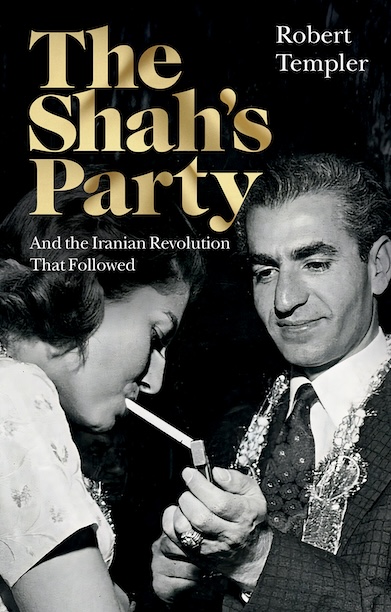
The Shah’s Party
And the Iranian Revolution That Followed
In 1971, the Shah of Iran threw what was declared the Party of the Century. Before it was over, it had been written off as a disaster and helped to precipitate his downfall.
Description
The Shah’s Party colourfully captures Iran’s oil-rich boom years. In 1971, eight years before the dynasty fell, Shah Mohammad Reza Pahlavi and his glamorous wife, Farah Diba, hosted one of the largest gatherings of world leaders ever, celebrating the 2,500th anniversary of the Persian monarchy. But this stranger-than-fiction event, staged in a tented city by the ancient ruins of Persepolis, came amidst a rise in leftist agitation and a turn towards political Islam.
Ruhollah Khomeini, an exiled mullah, began a relentless campaign against the Shah. A skilled populist, Khomeini tapped into growing inequalities and resentments to push his theocratic vision, particularly among those who had left the countryside in search of work. The Shah’s autocratic style played poorly in a world increasingly concerned with human rights.
The Persepolis party became a symbol of Iran’s regime, allowing the Shah’s critics to portray him as repressive and out of touch with the struggles of ordinary people. Khomeini’s novel religious populism and his mastery of messaging steamrollered the Shah; he left it too late to move towards democracy, losing the support of his army, his people and his allies. In 1971, trickles of dissent started to build into a revolutionary torrent that, within a decade, would end the dynasty.
Reviews
‘Written in an accessible and engaging style, the book uses the event to highlight the ambition and detachment of the late Pahlavi order […] One reason the book feels timely is that it also helps explain why nostalgia for the Pahlavi era remains powerful.’ — FT
‘Remind[s] us that, although the shah and Khomeini agreed on almost nothing, both understood the power of Iran’s cultural nationalism.’ — History Today
‘Readers will enjoy the challenges and paradoxes that [Templer] throws at them in this fast-paced and readable work.’ — Asian Review of Books
’This analysis of Iran’s modern history of autocracy and the rise of political Islam offers a timely understanding of the nation’s defiance.’ — The Canberra Times
‘A masterful account of how a regime celebrated itself into oblivion. Richly researched, beautifully paced and quietly unsettling.’ — Thant Myint-U, author of Peacemaker: U Thant and the Forgotten Quest for a Just World
‘A kaleidoscopic tour de force—comprehensive in scope, meticulously researched and vividly written. More than just a fascinating slice of history, The Shah’s Party is an indispensable guide to understanding the complexity of contemporary Iran.’ — Gareth Evans, former Australian foreign minister and International Crisis Group president
‘Beautifully written and insightful, The Shah’s Party presents a vivid look into the Iranian monarchy’s last hurrah, celebrations that were at once opulent and disastrous. By placing the Shah’s celebration in national, international and historical contexts, Templer chronicles the monarchy’s steady atrophy and its impending collapse. A book of tremendous value, a terrific read.’ — Mehran Kamrava, Professor of Government, Georgetown University in Qatar, and author of Triumph and Despair: In Search of Iran’s Islamic Republic
‘The Shah’s Party is a strikingly original and beautifully written account of Iran in the 1970s. It is an exclusive invitation into the lives of people who shaped its politics and culture in ways that are often overlooked, yet remain profoundly relevant today. To read this book is to see the past anew.’ — Michael Shaikh, author of The Last Sweet Bite
‘In the Shah’s Party, Robert Templer reconstructs the twilight of the Pahlavi era with cinematic clarity. Through the despots, dilettantes and deal makers who converged on Persepolis, he captures a monarchy staging its last and grandest performance even as revolution gathered beyond the floodlights. A gripping history of debauched power, spectacle and political miscalculation. Templer turns a legendary celebration into a timely lens on the waning authority of monarchy and fervent forces that would reshape Iran and the wider world.’ — Candace Rondeaux, author of Putin’s Sledgehammer
Author(s)

Robert Templer is a writer and former professor at the Central European University, where he also founded a research centre on post-conflict recovery. From 2011–2012, he was director of the Asia Programme at the International Crisis Group and has visited Iran on many occasions. He is the author of four books including the acclaimed Shadows and Wind: A View of Modern Vietnam and A Basilisk Glance: Poisoners from Plato to Putin.
FAQs
Frequently Asked Questions
What is "The Shah’s Party" about?
The Shah's Party colourfully captures Iran’s oil-rich boom years. In 1971, eight years before the dynasty fell, Shah Mohammad Reza Pahlavi and his glamorous wife, Farah Diba, hosted one of the largest gatherings of world leaders ever, celebrating the 2,500th anniversary of the Persian monarchy. But this stranger-than-fiction event, staged in a tented city by the ancient ruins of Persepolis, came amidst a rise in leftist agitation and a turn towards political Islam.
Ruhollah Khomeini, an exiled mullah, began a relentless campaign against the Shah. A skilled populist, Khomeini tapped into growing inequalities and resentments to push his theocratic vision, particularly among those who had left the countryside in search of work. The Shah’s autocratic style played poorly in a world increasingly concerned with human rights.
The Persepolis party became a symbol of Iran’s regime, allowing the Shah’s critics to portray him as repressive and out of touch with the struggles of ordinary people. Khomeini’s novel religious populism and his mastery of messaging steamrollered the Shah; he left it too late to move towards democracy, losing the support of his army, his people and his allies. In 1971, trickles of dissent started to build into a revolutionary torrent that, within a decade, would end the dynasty.
Who wrote "The Shah’s Party"?
"The Shah’s Party" was written by Robert Templer.
Robert Templer is a writer and former professor at the Central European University, where he also founded a research centre on post-conflict recovery. From 2011–2012, he was director of the Asia Programme at the International Crisis Group and has visited Iran on many occasions. He is the author of four books including the acclaimed Shadows and Wind: A View of Modern Vietnam and A Basilisk Glance: Poisoners from Plato to Putin.
Related books