The Realist
The Life and Ideas of Hans Morgenthau
The first biography of Hans Morgenthau, refugee from Nazi Germany and pioneer of the ‘realist’ approach to international relations, now resurgent in global politics.
Description
‘International politics, like all politics, is a struggle for power.’ Hans Morgenthau wrote these words in 1948, as Soviet–American wartime cooperation deteriorated into tense post-war rivalry. His Politics Among Nations quickly became the defining international relations textbook. Henry Kissinger said, ‘All of us who taught the subject after him, however much we differed from one another, had to start with his reflections.’
Morgenthau’s realism stemmed from his traumatic experiences in interwar Germany. Amid rampant anti-Semitism, his classmates ostracised and spat at him. He saw Hitler break the law with impunity when he marched on Morgenthau’s hometown, Coburg. Morgenthau concluded that abstract ideals offered no protection: power only yielded to countervailing power. Fleeing to the US in 1937, his influential thought drove Cold War foreign-policy debates. As his peers backed the Vietnam War, Morgenthau dismantled the case for intervention on realist grounds.
Meticulously researched and masterfully written, The Realist shows the enduring relevance of Morgenthau’s ideas in our age of international disorder and great power competition.
Table of contents
Preface: A World of Hope
Chapter One: Childhood, Interrupted
Chapter Two: Isolation
Chapter Three: The Education of a Realist
Chapter Four: The Nazis at the Door
Chapter Five: Fleeing
Chapter Six: A German in Kansas
Chapter Seven: Casting Aside Scientific Delusions
Chapter Eight: The Struggle for Power
Chapter Nine: The Moral Dignity of the National Interest
Chapter Ten: The Need for a Corrective
Chapter Eleven: The Purpose of American Politics
Chapter Twelve: Vietnam
Chapter Thirteen: Twilight Years
Epilogue: The Legacy of Hans Morgenthau
Bibliography
Index
Reviews
‘Hans Morgenthau was the most consequential American political theorist of the twentieth century. Henry Kissinger and others stood on his shoulders. Finally there is a full-bodied biography of the man. David M. Sacks, in discovering Morgenthau for a new generation, also defines foreign policy realism, a concept that has been vastly misunderstood.’ — Robert D. Kaplan
‘Hans Morgenthau’s writings are central to understanding the past, present, and future. In this gripping, definitive biography, David M. Sacks tells the story of the young man who fled Hitler’s Germany and connects it to the professor whose ideas and words provided direction for policymakers navigating the Cold War—ideas and words that continue to shape the thinking of almost everyone involved in the debate about America’s role in the world.’ — Richard Haass
‘Not always subtle but often right, Hans Morgenthau was the founding father of international relations realism and a towering and often combative intellectual. David Sacks’ outstanding biography shows that Morgenthau’s life was as significant as his thought.’ – Odd Arne Westad, author of The Coming Storm
Author(s)
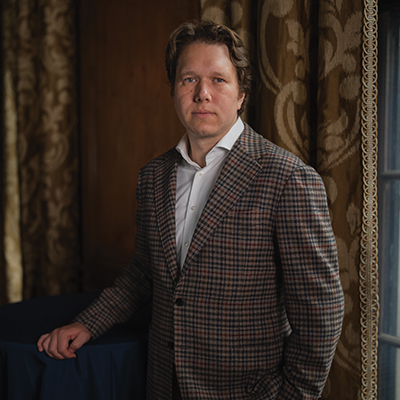
David M. Sacks is a senior fellow at the Council on Foreign Relations. An expert on China and Taiwan, he has written for outlets including Foreign Affairs and Time. His research and commentary have also been featured in The New York Times, The Wall Street Journal, The Economist and on the BBC. He lives in New York with his wife and two daughters.
Related books