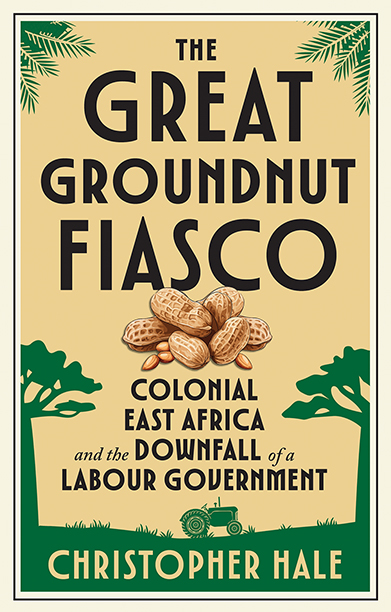
The Great Groundnut Fiasco
The fascinating story of Labour’s efforts to feed post-war Britain by leveraging its African colonies—and the enduring political consequences of the Scheme’s failure
Description
Britain in 1946 was a bruised and miserable nation. Despite its victory in World War Two, it had emerged disillusioned, hard up and chronically short of food and edible oils. The new Labour government had won a decisive mandate, but had so far failed to deliver its promised ‘New Jerusalem’. Desperate to restore morale, it devised an audacious solution to Britain’s post-war scarcity: the East African Groundnut Scheme.
Thousands of volunteers would clear Yorkshire-sized tracts of Tanganyikan bush to grow oil-rich groundnuts. Labour championed this crusade with messianic zeal, convinced that British ingenuity could transform its colonies into agricultural powerhouses. But despite massive investment, the Scheme collapsed spectacularly, having failed to conduct adequate research and having disregarded local knowledge. Conservatives and tabloids buried it beneath ridicule, with ‘groundnuts’ becoming a byword for left-wing incompetence and economic bungling. The fallout would contribute to Labour’s 1951 electoral defeat. But was it truly a government blunder?
Christopher Hale reveals a more complex story. The United Africa Company (a subsidiary of Anglo-Dutch giant Unilever) sold the Scheme to fraught ministers, then catastrophically mismanaged operations. The real scandal wasn’t socialism gone wrong—it was the betrayal of a nation’s hopes by a corporate behemoth.
Author(s)

Christopher Hale is a documentary producer and the author of five non-fiction books. Educated at the Universities of Sussex and Edinburgh, he has made documentaries for broadcasters including the BBC, Channel 4 and National Geographic. His books have focused on the Holocaust, post-colonialism and the ideologies of the Third Reich.
Related books