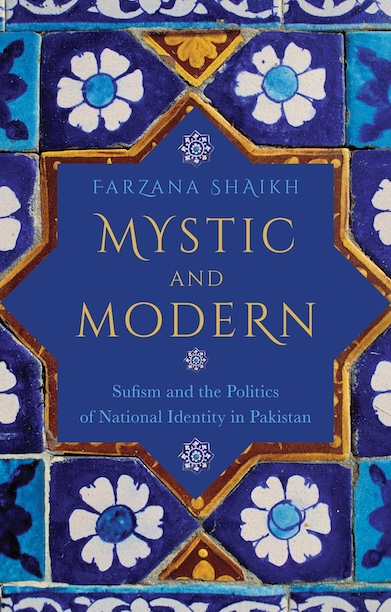
Mystic and Modern
Sufism and the Politics of National Identity in Pakistan
Evaluates the instrumentalisation of Sufism in the politics of Pakistan and its consequences for the nation.
Description
Pakistan, historically known for its veneration of Sufi saints and shrines, has long struggled to reconcile this heritage with a governing discourse of ‘Muslim modernism’, which sees local expressions of Sufism as deviations from Islam.
Farzana Shaikh explores the disputed role of Sufism in how Pakistan has come to define its Muslim identity since 1947, charting this contestation through the prism of state-led ‘modernist’ critiques of Sufi practices. She reveals how attempts by successive governments to mould the language of Sufism to support contrasting visions of Pakistan have in fact fuelled tensions and accentuated doubts about its place in Pakistani nationhood. She also suggests that state efforts to appropriate Sufism were constrained by the fragile legitimacy of Pakistan’s ruling ‘modernist’ elites, who relied on Sufi religious authority to authenticate their claim to be ‘acting in the name of Islam’, as well as to fend off a politically ambitious clerical establishment committed to the creation of an Islamic state.
In the aftermath of 9/11, Pakistan cultivated an image of itself as a ‘moderate’ Muslim state resting on Sufi foundations. But as Shaikh shows, this may only deepen anxieties over the meaning of the country’s Islamic identity, rather than dissolve them.
Author(s)
Farzana Shaikh is an associate fellow in the Asia-Pacific Programme at Chatham House, and the author of Making Sense of Pakistan and Mystic and Modern. She has lectured and written widely on the country during an academic career that has included positions in the UK, the US and Europe.
Related books