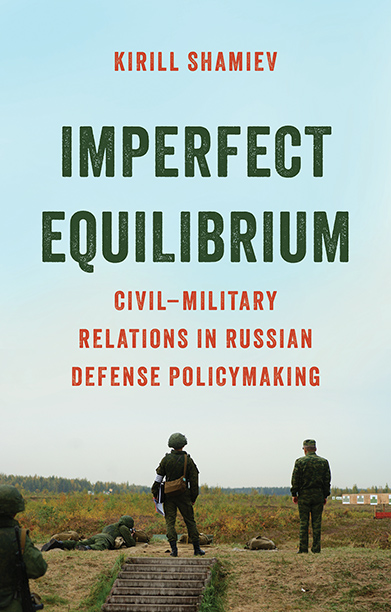
Imperfect Equilibrium
Civil–Military Relations in Russian Defense Policymaking
Part of the New Perspectives on Eastern Europe and Eurasia seriesWhy has Russia’s military struggled to adapt to the challenges of contemporary warfare?
Description
Despite years of attempts to improve its military capabilities, Russia’s full-scale invasion of Ukraine in 2022 revealed a crippling lack of skill, discipline and equipment. Non-material factors, in particular the power struggle between military and civilian leaderships, have hindered reform of its armed forces: with officers dominating defense policy, the Kremlin has struggled to implement the necessary changes.
Kirill Shamiev explores the political reasons behind Russia’s poor military preparedness for the war in Ukraine. He demonstrates how a seemingly obedient military has frequently blocked civilian reforms, taking advantage of weak oversight mechanisms. The Kremlin’s efforts to centralise control and make the armed forces personally accountable to President Vladimir Putin harmed institutional learning, cementing a conservative civil–military status quo. While this protected the military from civil society interference and ensured Putin’s autocratic rule, it ultimately limited the pace and scope of change.
Analysing three cases of reform between 2000 and 2021, Imperfect Equilibrium offers critical insights into the relationship between civilian control and military effectiveness in Russia. Drawing on extensive qualitative and quantitative evidence—including interviews, parliamentary speeches, media reports and surveys—it shows how unchecked autonomy can undermine military development, even in authoritarian contexts.
Table of contents
List of Figures and Tables
Acknowledgments
Introduction
1. Russian Civil-Military Relations After the USSR
2. Civil-Military Relations and Russian Military Culture
3. Winds of Change? Russian Military Development in 2000-7
4. From Combat Effectiveness to Oversight Overload: Russia’s Military Development in 2007-21
5. Russian Civil-Military Relations and the Full-Scale Invasion of Ukraine
Conclusion: The Tug-of-War in Russia’s Civil-Military Relations
Selected Bibliography
Appendix 1: List of Interviews
Appendix 2: Adapted Advocacy Coalition Framework
Appendix 2. 1: Operationalization of Factors Used in Analysis
Appendix 3: Defense Policy Agenda
Notes
Index
Reviews
‘Comprehensive.’ — Foreign Affairs
‘The volume will be of particular interest to scholars of civil–military relations, Russian politics, authoritarian governance, and military effectiveness. More broadly, it advances our understanding of how authoritarian leaders can maintain political control over the armed forces while still struggling to monitor, reform, and effectively manage military institutions. Shamiev offers important insights into both the sources of Russian military performance and the broader challenges of governance in authoritarian political systems.’ — Armed Forces & Society
‘A thoughtful and deeply researched account of civil–military relations in the post-Soviet period.’ — Mikhail Kasyanov, former prime minister of Russia
‘Every army reflects the society from which it is drawn; Russia is no exception. Imperfect Equilibrium explains how conservatism, competing strategic visions, and bureaucratic infighting left Putin’s army ill-prepared for his war in Ukraine and will continue to hinder military reform.’ — John Foreman, UK Defence Attaché in Moscow (2019–22) and Kyiv (2008–11)
‘A deeply insightful and illuminating account, shedding light on the important role civilian–military relations played in shaping defense reform and policymaking in Russia, from the end of the Cold War to the Russian invasion of Ukraine.’ — Michael Kofman, Senior Fellow, Russia and Eurasia Program, Carnegie Endowment for International Peace
‘Timely, nuanced and compelling. Essential reading for anyone seeking to understand the Russian military and defense establishment over the last several decades.’ — Risa Brooks, Allis Chalmers Professor of Political Science, Marquette University
‘Shamiev insightfully connects complex Kremlin politics to its influence on military development. This fascinating, well-researched book is a welcome addition to the field of military analysis.’ — Dara Massicot, Senior Fellow, Russia and Eurasia Program, Carnegie Endowment for International Peace
‘This comprehensive analysis focuses on the ideas, interests and identities of key actors and their impact on the performance of the Russian armed forces. A must-read for scholars of Russia.’ — Vladimir Gel’man, Professor of Russian and Eurasian Politics, University of Helsinki
Author(s)
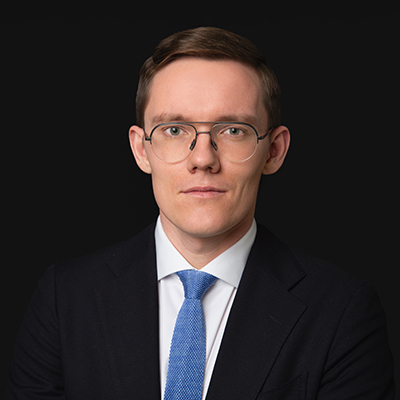
Kirill Shamiev is a political scientist specializing in civil–military relations, Russian domestic politics, and defense affairs. He received his PhD from Central European University and, at the time of publication, served as a Postdoctoral Researcher at the Institute of International Relations and Political Science, Vilnius University. His scholarship and public commentary have appeared in Foreign Affairs, Foreign Policy, CSIS, The Guardian and other leading outlets.
FAQs
Frequently Asked Questions
What is "Imperfect Equilibrium" about?
Despite years of attempts to improve its military capabilities, Russia’s full-scale invasion of Ukraine in 2022 revealed a crippling lack of skill, discipline and equipment. Non-material factors, in particular the power struggle between military and civilian leaderships, have hindered reform of its armed forces: with officers dominating defense policy, the Kremlin has struggled to implement the necessary changes.
Kirill Shamiev explores the political reasons behind Russia’s poor military preparedness for the war in Ukraine. He demonstrates how a seemingly obedient military has frequently blocked civilian reforms, taking advantage of weak oversight mechanisms. The Kremlin’s efforts to centralise control and make the armed forces personally accountable to President Vladimir Putin harmed institutional learning, cementing a conservative civil–military status quo. While this protected the military from civil society interference and ensured Putin’s autocratic rule, it ultimately limited the pace and scope of change.
Analysing three cases of reform between 2000 and 2021, Imperfect Equilibrium offers critical insights into the relationship between civilian control and military effectiveness in Russia. Drawing on extensive qualitative and quantitative evidence—including interviews, parliamentary speeches, media reports and surveys—it shows how unchecked autonomy can undermine military development, even in authoritarian contexts.
Who wrote "Imperfect Equilibrium"?
"Imperfect Equilibrium" was written by Kirill Shamiev.
Kirill Shamiev is a political scientist specializing in civil–military relations, Russian domestic politics, and defense affairs. He received his PhD from Central European University and, at the time of publication, served as a Postdoctoral Researcher at the Institute of International Relations and Political Science, Vilnius University. His scholarship and public commentary have appeared in Foreign Affairs, Foreign Policy, CSIS, The Guardian and other leading outlets.
What is the Table of Contents for "Imperfect Equilibrium"?
List of Figures and Tables
Acknowledgments
Introduction
1. Russian Civil-Military Relations After the USSR
2. Civil-Military Relations and Russian Military Culture
3. Winds of Change? Russian Military Development in 2000-7
4. From Combat Effectiveness to Oversight Overload: Russia's Military Development in 2007-21
5. Russian Civil-Military Relations and the Full-Scale Invasion of Ukraine
Conclusion: The Tug-of-War in Russia's Civil-Military Relations
Selected Bibliography
Appendix 1: List of Interviews
Appendix 2: Adapted Advocacy Coalition Framework
Appendix 2. 1: Operationalization of Factors Used in Analysis
Appendix 3: Defense Policy Agenda
Notes
Index
Related books