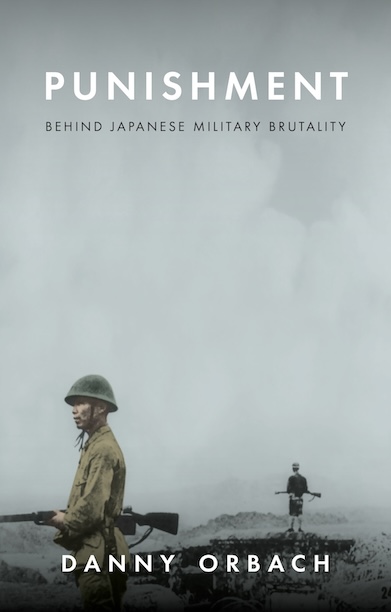
Punishment
Behind Japanese Military Brutality
A chilling exploration of how Imperial Japan framed war as justice—and how that moral logic helped unleash extraordinary brutality across Asia and the Pacific.
Description
Why was the Japanese Army so brutal before and during World War Two? This haunting question anchors a sweeping investigation into the moral universe of Imperial Japan’s soldiers, tracing their path from the twilight of the samurai age to the ashes of Manila in 1945.
Punishment uncovers a world in which war was conceived not merely as combat, but also as justice. Officers and soldiers learned to navigate two rival visions of war: one restrained by the ‘foreign gaze’ of the Western world, the other rooted in older traditions that cast adversaries as ‘rebels’ and ‘bandits’ deserving exemplary punishment. However, these competing strategies were intertwined, in an interplay of mutual mitigation and brutalisation. Drawing on archival material in six languages and fieldwork conducted across Asia—from Taiwan’s indigenous highlands to Manchuria’s sorghum fields and the streets of Nanjing—Danny Orbach reveals how ambiguity, obedience, fear and ideology converged on the battlefield. Vague orders could become massacres, and the boundary between necessity and cruelty became perilously thin.
Part detective story, part moral history, Punishment illuminates how a modern state slid into devastating violence—and why that descent was neither inevitable nor easily explained.
Table of contents
Acknowledgements
Introduction
PART I: PURSUIT OF CIVILIZATION
Chapter 1. Potato Samurai: Introducing the Principle of Punishment
Chapter 2. Knights, Samurai, and Barbarians: The Standard of Civilization
Chapter 3. Under Foreign Eyes: The Taiwan Expedition, 1874
Chapter 4. Fighting a Civilized War: The First Sino-Japanese War, 1894
Chapter 5. Relapse into Barbarism?: The Massacre of Port Arthur, November 1894
Chapter 6. Race to the Bottom, Race to the Top: The Boxer Rebellion, 1900
Chapter 7. Vengeance: The Allied Expedition to Beijing, June-August 1900
Chapter 8. The Foot of the White Man: Japan and the Allied Occupation of Beijing, 1900
PART II: THE BANDITIZATION OF WARFARE
Chapter 9. Burning Sorghum Fields: The Dark Corner of the Russo-Japanese War, 1904 – 1905
Chapter 10. Red Beards: The World of the Mounted Bandits
Chapter 11. Playing on the Russian Chessboard: Japan Enters Siberia, 1918-1919
Chapter 12. Burn, Irrespective of Size: The Road to Ivanovka, 1919
Chapter 13. The Beast Tugs at Its Chains: Nikolaevsk and Its Aftermath, 1920
Chapter 14. The Seeping Oil: Pursuing Chinese “Bandits,” 1931-1937
PART III: THE ROAD TO NANJING
Chapter 15. Punishment Resurgent: From Shanghai to Nanjing
Chapter 16. “Wipe them All”: The Decision to Kill the Prisoners
Chapter 17. Security and Purity: The Hunt for Hidden Soldiers
Chapter 18. City of Death: The Rape of Nanjing
Chapter 19. Under Dimming Eyes: The Decline of the Foreign Gaze
PART IV: THE PACIFIC WAR: REACHING ROCK BOTTOM IN THE PHILIPPINES, 1942-1945
Chapter 20. Brutality without Bandits: The Death March of Bataan, 1942
Chapter 21. From Good Subjects to Bandits: Towards the Manila Massacre , 1942-1945
Chapter 22. Pride and Despair: The Manila Massacre, February 1945
Conclusion: Behind Japanese Military Brutality
List of Abbreviations
Notes
Bibliograph
Reviews
‘Deeply researched and beautifully written, Punishment offers a fresh explanation of the paradox of Japan’s military: its commitment to Western norms of warfare alongside infamous brutality. Orbach ranges deftly from the samurai era to 1945, and from high command to the front line.’ — Andrew Gordon, Harvard University, author of A Modern History of Japan
‘An elegantly written, meticulously researched and extremely timely book. Though focused on twentieth-century Japan, Punishment makes an argument of universal significance: when armies come to view enemy combatants as bandits, savages and criminals, restraints on warfare give way to acts of astonishing brutality.’– Lawrence Douglas, Amherst College, author of The Criminal State
‘Sophisticated and nuanced, Punishment examines how Japan’s warrior ethics responded to Western notions of civilisation and barbarism while refusing simplistic explanations for when, where and why soldiers committed atrocities.’ — Anne Walthall, University of California, Irvine
‘A terrifying march through the history of violence in Japan’s modern armed forces, Punishment challenges readers to understand mass military violence as the intersection of changing legal codes and competing notions of civilisation and barbarism.’ — Aaron Moore, University of Edinburgh
‘A powerful, riveting and provocative account of brutality in the Imperial Japanese Army.’ — Jeremy Yellen, Chinese University of Hong Kong
Author(s)

Danny Orbach is an associate professor in the History and Asian Studies Departments at the Hebrew University of Jerusalem. He received his PhD from Harvard University. He is the author of Fugitives and Punishment (both published by Hurst); and The Plots Against Hitler and Curse on This Country.
Related books