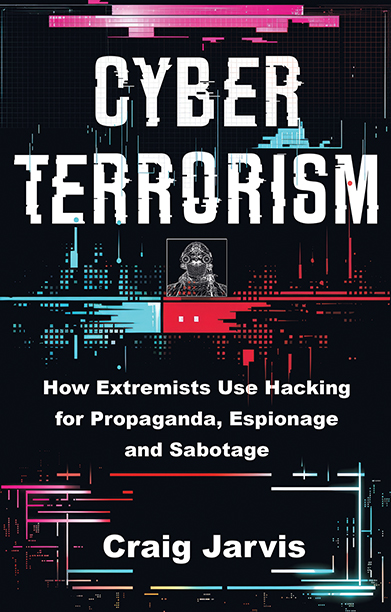
Cyberterrorism
How Extremists Use Hacking for Propaganda, Espionage and Sabotage
Chronicles the history of cyberterrorism without the alarmism.
Description
Cyberterrorism conjures fear. Barry Collin prophesied it would mean ‘hacking with a body count’ when he coined the term in the 1980s. ‘Tomorrow’s terrorist may be able to do more damage with a keyboard than with a bomb,’ the US National Research Council assessed. By 2012, US Defence Secretary Leon Panetta warned that ‘a destructive cyber-terrorist attack could virtually paralyse the nation’. His was the latest in decades of government warnings of impending catastrophe. Yet the evidence for such assessments was minimal; terrorist hackers were almost non-existent. Now, a new generation of extremists are coming of age during an accelerating technological revolution; the calamitous fears once rooted solely in science fiction can no longer be as readily dismissed.
This book grounds cyberterrorism in evidence, separating alarmist narratives from sombre reality. It chronicles cyberterrorism’s evolution, examining hacking operations and those who sit behind the keyboard. It documents how hacking amplifies propaganda, industrialises espionage, and enables sabotage, before assessing the possibility of lethal cyber capability acquisition. Finally, Craig Jarvis explores whether AI will elevate terrorist hacking, intensifying their attempts to influence and destabilise societies.
Reviews
‘This is an excellent book that properly introduces and assesses the risk of cyber-terrorism using a range of detailed case-studies in five substantive well-argued chapters. Well written and accessible, it ought to be a core text for policymakers, cybersecurity experts and academics/students.’ — Alexander Evans, Professor, LSE, and former Director Cyber, FCDO
Author(s)

Craig Jarvis, an independent academic specialising in national security and frontier technologies, lectures at the Universities of Oxford and Cambridge. He studied at the University of Oxford, King’s College London and Royal Holloway, University of London. His first book was Crypto Wars: The Fight for Privacy in the Digital Age (CRC Press, 2020).
FAQs
Frequently Asked Questions
What is "Cyberterrorism" about?
Cyberterrorism conjures fear. Barry Collin prophesied it would mean ‘hacking with a body count’ when he coined the term in the 1980s. ‘Tomorrow’s terrorist may be able to do more damage with a keyboard than with a bomb,’ the US National Research Council assessed. By 2012, US Defence Secretary Leon Panetta warned that ‘a destructive cyber-terrorist attack could virtually paralyse the nation’. His was the latest in decades of government warnings of impending catastrophe. Yet the evidence for such assessments was minimal; terrorist hackers were almost non-existent. Now, a new generation of extremists are coming of age during an accelerating technological revolution; the calamitous fears once rooted solely in science fiction can no longer be as readily dismissed.
This book grounds cyberterrorism in evidence, separating alarmist narratives from sombre reality. It chronicles cyberterrorism’s evolution, examining hacking operations and those who sit behind the keyboard. It documents how hacking amplifies propaganda, industrialises espionage, and enables sabotage, before assessing the possibility of lethal cyber capability acquisition. Finally, Craig Jarvis explores whether AI will elevate terrorist hacking, intensifying their attempts to influence and destabilise societies.
Who wrote "Cyberterrorism"?
"Cyberterrorism" was written by Craig Jarvis.
Craig Jarvis, an independent academic specialising in national security and frontier technologies, lectures at the Universities of Oxford and Cambridge. He studied at the University of Oxford, King’s College London and Royal Holloway, University of London. His first book was Crypto Wars: The Fight for Privacy in the Digital Age (CRC Press, 2020).
Related books