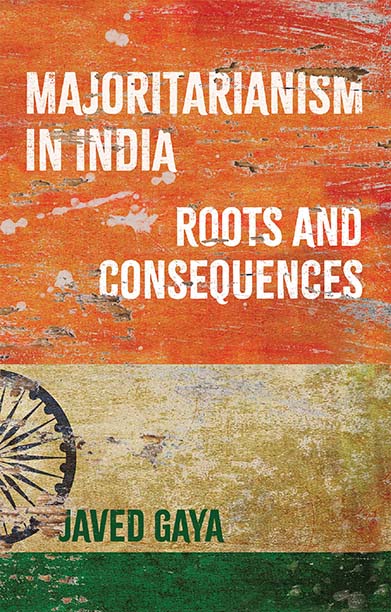
Majoritarianism in India
Roots and Consequences
Traces the roots of the strident nationalism we see in modern India to the founding of the nation and decisions taken in the 1940s.
Description
Majoritarianism in India examines the strident nationalism seizing India today, tracing its roots back to decisions made in the 1940s, particularly Partition and the drafting of the Constitution. Pre-Partition India had debated whether ‘liberty’—understood as ‘one man, one vote’—or ‘equality’—the equal political representation of minorities within a federal structure—should be the basis of a state. Congress chose ‘liberty’, but contemporary India is reaching the point where it has neither: its democracy is compromised and majoritarianism prevails. By dividing the subcontinent and elevating the ‘cow belt’, Partition seriously impeded social and economic progress in the newly created states, and brought communalism and casteism to the fore.
Javed Gaya investigates the origins and consequences of India’s increasingly majoritarian system, assessing the frailty of constitutional safeguards, the role of the judiciary and the subversion of federalism. He analyses the futility of today’s quest for cultural purity, and shows how history is being rewritten with an exclusionary intent. He both interrogates the myths created to sustain this nativist ideology—including around the causes of Partition and the alleged privileging of minorities—and discusses the role of citizenship and the externalisation of the Hindu–Muslim conflict.
Table of contents
Introduction
PART I
THE ROAD TO PARTITION
1. The Myth of Eternal India
2. The Colonial State and the Sacred Space
3. The Colonial State and Minority Rights
4. The Partition
PART II
THE POLITICAL AND CULTURAL CONSEQUENCES OF PARTITION
5. The Rise of the Cow Belt
6. Language and Culture: Towards Purity
7. The Weaponization of History to Underpin Nationalism
PART III
SECULARISM
8. The Indian Version of Secularism
9. Secularism and Caste
10. Secularism, Personal Laws and the Uniform Civil Code
PART IV
ASYMMETRICAL FEDERALISM, CITIZENSHIP, THE INDIAN DIASPORA
11. Asymmetrical Federalism
12. Citizenship and the Citizenship Amendment Act
13. The Indian Diaspora
PART V
THE ROLE OF THE JUDICIARY AND MAJORITARIANISM
14. The Historic Role of the Judiciary Post-Independence
15. The Elevation of the Cow
16. Conversions become Criminal
17. Religion, Electoral Politics and the Disappearance of Minorities from
the Public Place
PART VI
FEDERALISM
18. Federalism, History and the Original Sin
19. Intrinsic Problems with Federalism, the 15th Finance Commission and
the Rise of Kleptocratic Federalism
PART VII
THE AFTERMATH OF PARTITION
PAKISTAN, KASHMIR, AND THE PLIGHT OF THE INDIAN MUSLIMS
20. The Aftermath of Partition
21. Kashmir
22. Pakistan and the Indian Muslims
23. The Plight of Indian Muslims
Notes
Bibliography
Reviews
‘At a time of rising sectarianism and alarming hate-fuelled attacks on minority communities, it is inspiring and deeply edifying to read Javed Gaya’s beautifully lucid and profoundly erudite book. His exploration of the current “architecture of hate” in contemporary India deserves a very wide audience.’ — Jacqueline Bhabha, Professor of the Practice of Health and Human Rights, Harvard Kennedy School
‘A detailed and fascinating analysis not only of the making of India’s constitution and its law of citizenship, but of the various controversies and judgements that have come to define citizenship differently for Hindus and Muslims. An entirely unique book.’ — Faisal Devji, Professor of Indian History and Director of the Asian Studies Centre, University of Oxford
‘Modi’s Hindu Rashtra cries out for a revisionist history of modern India to account for his success. Javed Gaya’s fluent, forensic account of the consolidation of a majoritarian common sense in politics and the law over the last hundred years, is that indispensable book. In a world crowded with illiberal democracies, everyone should read it.’ — Mukul Kesavan, essayist, author and contributor to The Guardian and the New York Review of Books; previously Professor of History, Jamia Millia Islamia, New Delhi
‘A tour d’horizon of Indian politics with a passionate and clearly articulated argument. A very serious and learned book that will be of interest to the broader intelligentsia and to specialists on South Asia.’ — Uday Singh Mehta, Distinguished Professor of Political Science, CUNY Graduate Center
‘A sobering read. Gaya offers a stark picture of how Partition cemented the sweeping effects of majoritarianism on almost all aspects of the social, cultural and political mechanisms of the post-colonial Indian state.’ — Pallavi Raghavan, Assistant Professor of International Relations, Ashoka University, and author of Animosity at Bay: An Alternative History of the India–Pakistan Relationship, 1947–1952
Author(s)
Javed Gaya is a lawyer from Mumbai, specialising in commercial arbitration law. He studied jurisprudence at the University of Oxford and has taught law at colleges affiliated to the University of Mumbai. He contributes to various publications on topics including constitutional law, history and foreign affairs, and writes book reviews.
FAQs
Frequently Asked Questions
What is "Majoritarianism in India" about?
Majoritarianism in India examines the strident nationalism seizing India today, tracing its roots back to decisions made in the 1940s, particularly Partition and the drafting of the Constitution. Pre-Partition India had debated whether ‘liberty’—understood as ‘one man, one vote’—or ‘equality’—the equal political representation of minorities within a federal structure—should be the basis of a state. Congress chose ‘liberty’, but contemporary India is reaching the point where it has neither: its democracy is compromised and majoritarianism prevails. By dividing the subcontinent and elevating the ‘cow belt’, Partition seriously impeded social and economic progress in the newly created states, and brought communalism and casteism to the fore.
Javed Gaya investigates the origins and consequences of India’s increasingly majoritarian system, assessing the frailty of constitutional safeguards, the role of the judiciary and the subversion of federalism. He analyses the futility of today’s quest for cultural purity, and shows how history is being rewritten with an exclusionary intent. He both interrogates the myths created to sustain this nativist ideology—including around the causes of Partition and the alleged privileging of minorities—and discusses the role of citizenship and the externalisation of the Hindu–Muslim conflict.
Who wrote "Majoritarianism in India"?
"Majoritarianism in India" was written by Javed Gaya.
Javed Gaya is a lawyer from Mumbai, specialising in commercial arbitration law. He studied jurisprudence at the University of Oxford and has taught law at colleges affiliated to the University of Mumbai. He contributes to various publications on topics including constitutional law, history and foreign affairs, and writes book reviews.
What is the Table of Contents for "Majoritarianism in India"?
Introduction
PART I
THE ROAD TO PARTITION
1. The Myth of Eternal India
2. The Colonial State and the Sacred Space
3. The Colonial State and Minority Rights
4. The Partition
PART II
THE POLITICAL AND CULTURAL CONSEQUENCES OF PARTITION
5. The Rise of the Cow Belt
6. Language and Culture: Towards Purity
7. The Weaponization of History to Underpin Nationalism
PART III
SECULARISM
8. The Indian Version of Secularism
9. Secularism and Caste
10. Secularism, Personal Laws and the Uniform Civil Code
PART IV
ASYMMETRICAL FEDERALISM, CITIZENSHIP, THE INDIAN DIASPORA
11. Asymmetrical Federalism
12. Citizenship and the Citizenship Amendment Act
13. The Indian Diaspora
PART V
THE ROLE OF THE JUDICIARY AND MAJORITARIANISM
14. The Historic Role of the Judiciary Post-Independence
15. The Elevation of the Cow
16. Conversions become Criminal
17. Religion, Electoral Politics and the Disappearance of Minorities from
the Public Place
PART VI
FEDERALISM
18. Federalism, History and the Original Sin
19. Intrinsic Problems with Federalism, the 15th Finance Commission and
the Rise of Kleptocratic Federalism
PART VII
THE AFTERMATH OF PARTITION
PAKISTAN, KASHMIR, AND THE PLIGHT OF THE INDIAN MUSLIMS
20. The Aftermath of Partition
21. Kashmir
22. Pakistan and the Indian Muslims
23. The Plight of Indian Muslims
Notes
Bibliography
Related books


